
Marine & shipbuilding
Marine & shipbuilding welding automation
Marine fabrication demands welds that hold up in the harshest environment on earth: saltwater, vibration, zero tolerance for failure. The Cobot Welder delivers repeatable MIG and pulsed MIG on marine-grade steel, stainless, and aluminum, and went up to 10× faster than manual TIG on U.S. Navy exhaust systems.
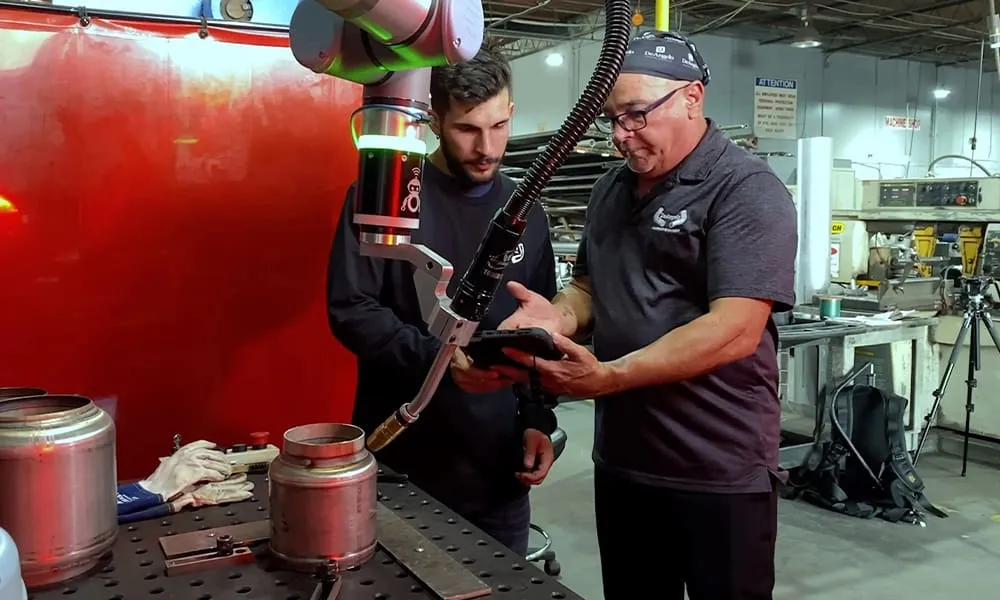 MARINE — NAVY-GRADE WELDS
800+
Shops running Beacon
Up to 10×
Faster than manual TIG
1 job
Paid for the entire cobot
20 min
From setup to first weld
Sound familiar?
The problems slowing your floor down
Skilled marine welders are almost impossible to find
Clean TIG and MIG on stainless, aluminum, and marine alloys (often in tight spaces) is the scarcest trade in the industry. Orders stack up, deadlines slip, and you turn down work you should be winning.
Manual welding can't keep up with your backlog
Long seams, repetitive joints, tight tolerances. When a fleet contract or Coast Guard order surges, manual welding becomes the bottleneck, and a missed delivery can cost the account.
You've tried automation before and it didn't work
Parts sent out came back below your standards; robotic cells couldn't handle your mix of assemblies and materials. Marine fab is too varied and precise for most automation.
How it works
How cobot automation fits your workflow
01
Program your first marine weld in minutes
Open Beacon, touch the joints on your assembly, set wire speed, voltage, travel, and weave. DeAngelo Marine's CEO was welding like a pro within 20 minutes of setup: no G-code, no robotics background.
02
Run production at up to 10× manual TIG speed
DeAngelo went from 2–5 inches per minute hand-TIG to 20 with the Cobot Welder, on Navy exhaust systems that demand flawless quality. Your welders shift to fit-up, inspection, and critical joints.
03
Save every part, recall it instantly
The next order for the same exhaust system or hull section? Pull up the saved program and start welding: zero reprogramming, seconds to switch between assemblies.
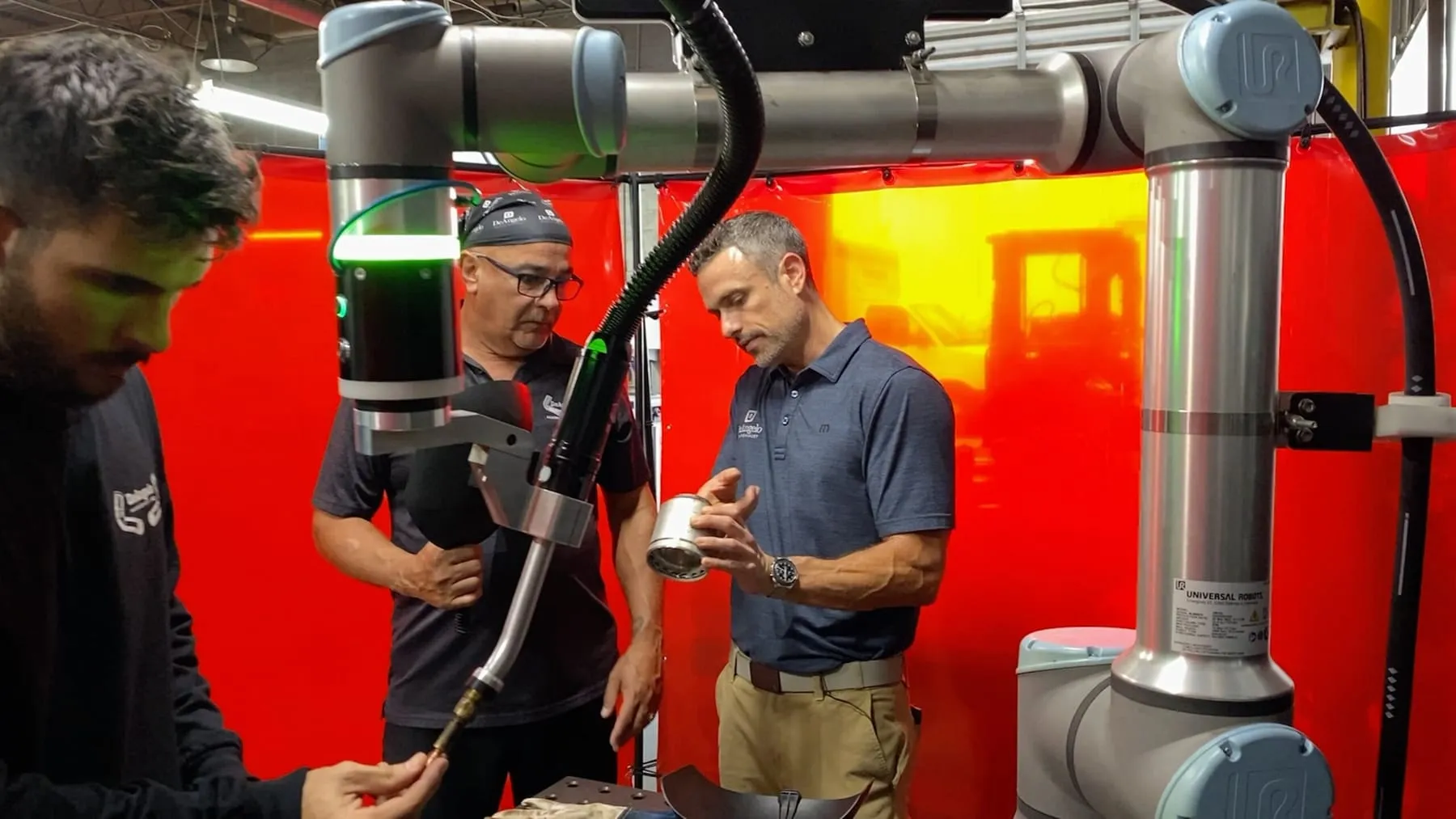 DEANGELO MARINE — 7 COBOTS PLANNED
In the field
“Twenty minutes after setup, I was welding like I'd been running robots my whole life.”
Your automation partner
What we automate for your shop
Welding, cutting, and coating, all controlled from the Beacon app. No robot programmers, no teach pendants, one platform for your entire floor.
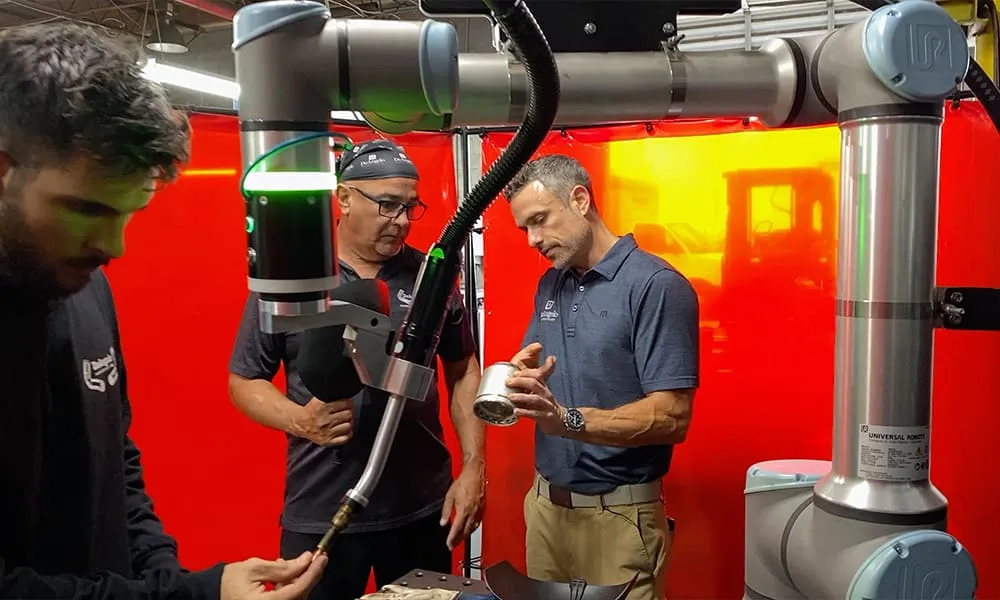 COBOT WELDER
MIG for assemblies, hulls & frames
MIG and pulsed MIG on stainless, aluminum, and carbon steel for exhaust systems, hull sections, deck assemblies, and brackets.Cobot Welder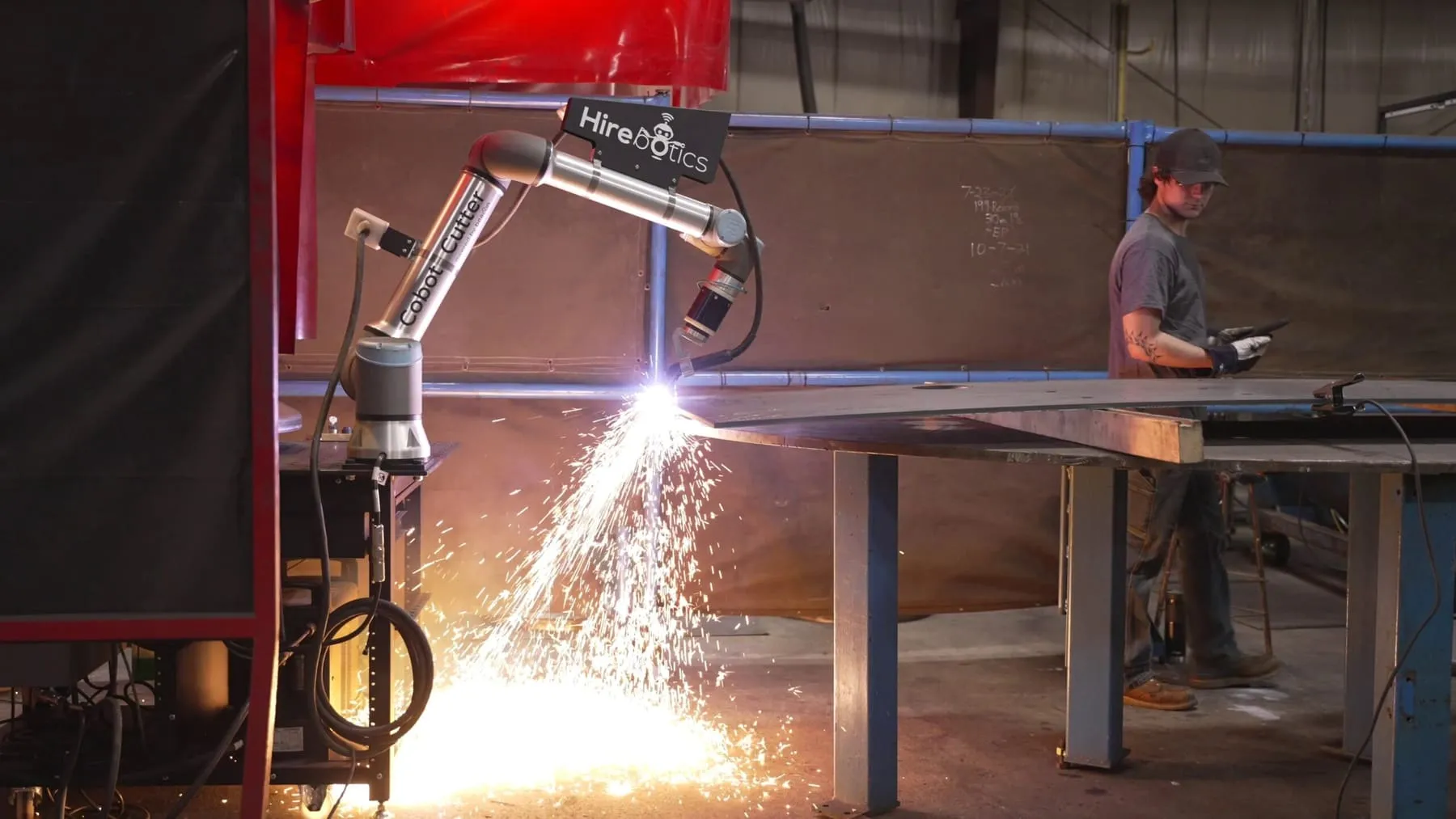 COBOT CUTTER
Plasma cutting for plates & brackets
Teach the path once for hull plates, brackets, gussets, and mounting hardware, and it repeats for every part after.Cobot Cutter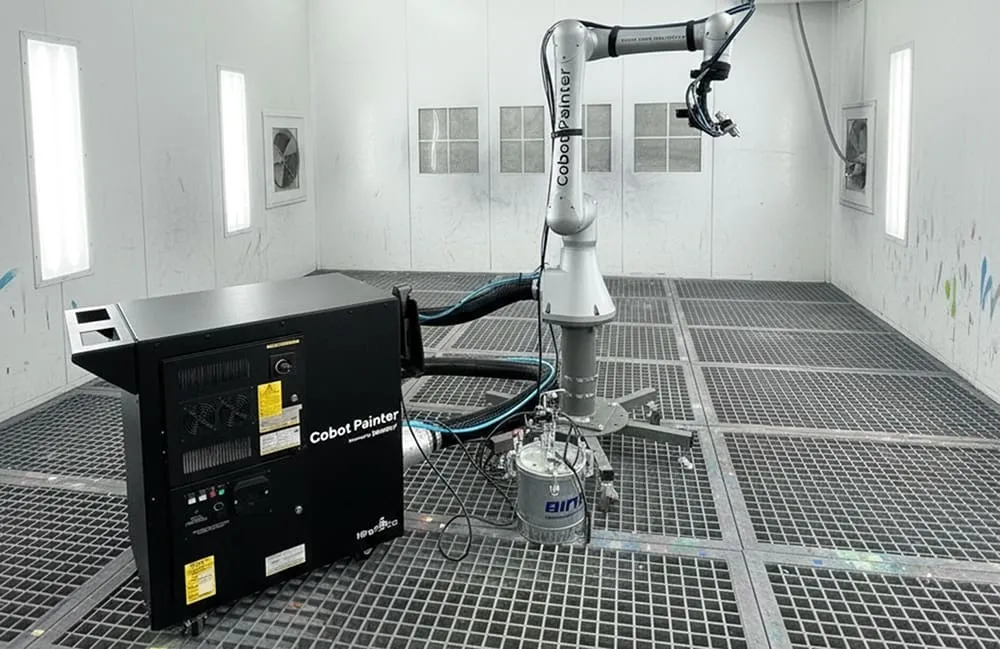 COBOT PAINTER
Marine coatings & anti-corrosion
Nothing destroys steel faster than saltwater. Automate primers, anti-corrosion treatments, and topcoats with consistent coverage.Cobot Painter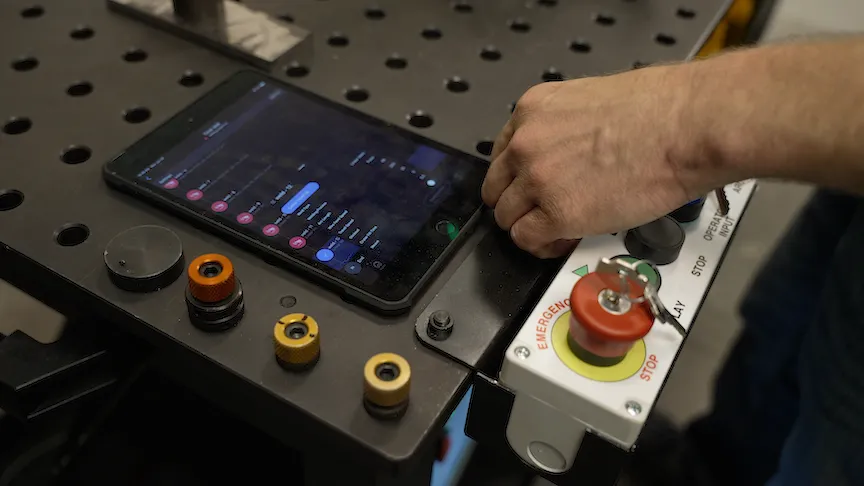 BEACON APP
One platform for the whole yard
Start with one cobot on your highest-volume assembly and expand. DeAngelo is planning seven across their floor.Beacon platformStart
Ready to automate your marine fabrication?
Speed up marine assemblies, exhaust systems, and structural components without falling behind on fleet and contract deadlines.